PL.Will Roberts says something that breaks his family's heart!"
At 12:25 a.m., something changed inside the room.
It wasn’t loud. It wasn’t dramatic in the way people imagine emergencies to be. In fact, from the outside, everything looked almost still.
But for those inside, the atmosphere shifted in a way that was immediately felt rather than spoken.
Every sound suddenly mattered. The beeping of monitors, the movement of footsteps in the hallway, even the quiet adjustments of medical staff—all of it became heavier, more meaningful, more present.
It was as if the room itself had begun to breathe differently.
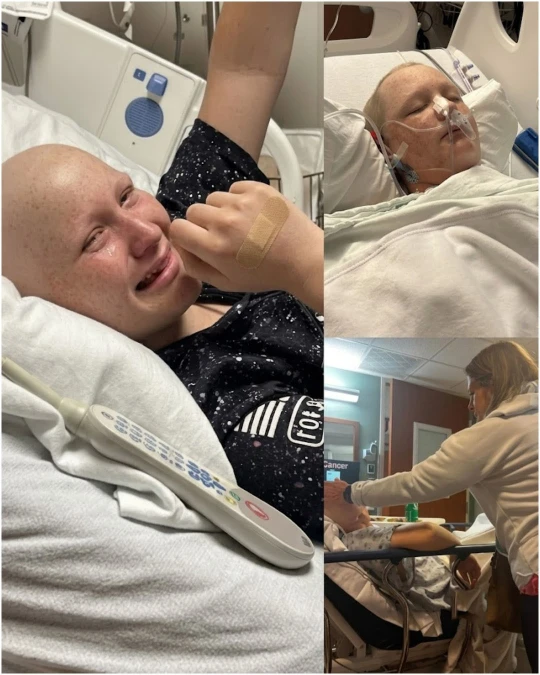
A Night Defined by Unspoken Truths
For Will Roberts’ family, the night carried something they had been trying to hold together for days: the weight of reality that no one wants to fully acknowledge.
There are moments in medical situations where hope and fear exist at the same time, without either fully taking over. Families often describe this as a state of suspended emotion—where you are not prepared to give up, but also not able to ignore what is happening in front of you.
This was one of those nights.
According to those familiar with the situation, there was a shift in how the medical team was interacting, a subtle change in urgency that signaled that the situation required closer attention.
Not panic. Not chaos. But seriousness in its most controlled form.
The Reality No One Says Out Loud
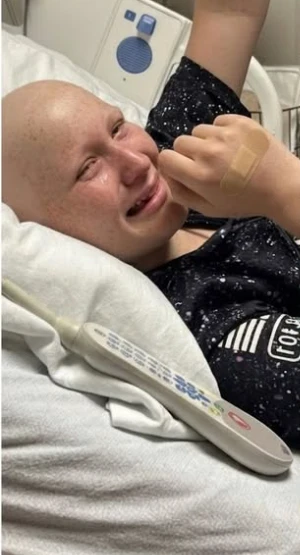
Every family facing a critical medical situation eventually encounters something even harder than the diagnosis itself: the unspoken reality.
In Will’s case, that reality is something his family has reportedly struggled to articulate publicly. Not because they are avoiding the truth, but because the truth itself carries emotional weight that is difficult to put into words.
In moments like this, families often protect not only privacy, but emotional survival. Saying too much can feel overwhelming. Saying too little can feel like holding everything inside.
So instead, what remains is silence.
A silence filled with meaning.
What Was Asked for at 12:25 a.m.
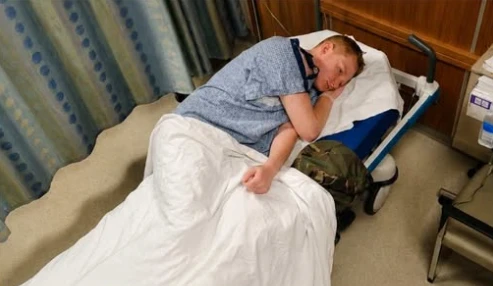
At the center of this story is a moment that reportedly happened shortly after 12:25 a.m.—a moment that those close to the situation say has stayed with them ever since.
It was not a request for something extraordinary.
It was not a demand for answers or certainty.
It was something far smaller.
And yet, that is exactly what made it so difficult.
In critical care environments, the smallest requests often carry the heaviest emotional weight. They reflect awareness, vulnerability, and the human need for comfort in moments where control no longer exists.
For families, those requests can become unforgettable—not because of what they are, but because of what they represent.
Inside the Hospital Atmosphere
While the public often sees hospitals as places of medical precision and constant action, those inside know a different reality.
There are long periods of waiting. Quiet conversations in corners. Short updates that carry more meaning than they seem to on the surface.
At night, especially, the environment becomes even more intense. The absence of daylight removes distractions, leaving only the sound of machines, movement of staff, and the emotional weight of uncertainty.
For Will’s family, this environment has become their temporary world—a place where time is measured not in hours, but in updates.
The Emotional Strain of Waiting
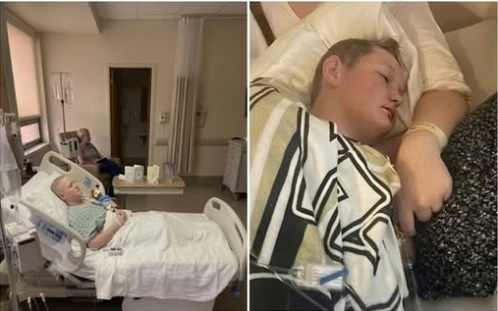
One of the most difficult aspects of any serious medical situation is waiting for clarity.
Waiting for improvement.
Waiting for stability.
Waiting for the next update that might change everything—or change nothing at all.
In these situations, families often find themselves analyzing every detail, every tone of voice, every pause in communication. Even silence becomes information.
And when updates are limited, imagination fills the gaps—sometimes helping, sometimes making things harder.
Why Small Moments Feel So Large
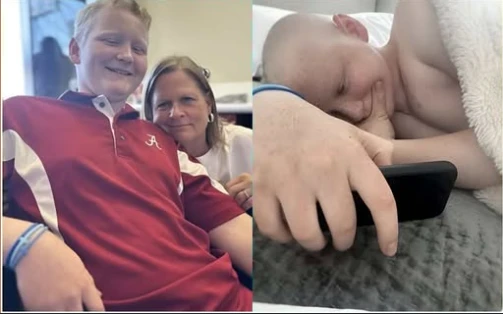
What makes this particular moment at 12:25 a.m. so impactful, according to those close to the situation, is not what was medically happening—but what it represented emotionally.
It represented vulnerability.
It represented awareness of difficulty.
It represented a human moment that cannot be reduced to charts, monitors, or clinical terms.
In situations like this, families often remember not the technical details, but the emotional fragments: a look, a word, a silence that lasted too long, or a request that was simpler than expected.
Those fragments become memories that last far beyond the hospital stay itself.
A Family Holding On in Real Time
Through all of this, Will’s family remains present—physically by his side, emotionally navigating a reality that changes hour by hour.
Support systems in such situations often become the only anchor. Family members take turns staying awake, monitoring updates, and trying to maintain stability in an environment where nothing feels stable.
Faith, hope, and emotional endurance become central—not as abstract ideas, but as daily necessities.
The Weight of Uncertainty
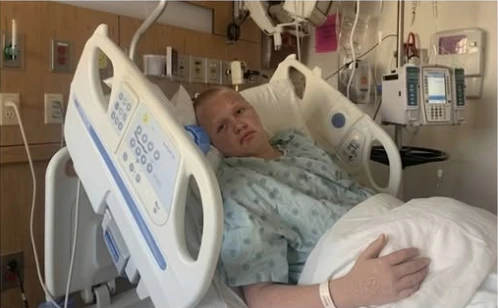
Perhaps the most difficult part of this entire situation is not what is known, but what is not.
Uncertainty creates space for fear, but also for hope. It exists in both directions at once.
For medical teams, uncertainty is something managed through observation, testing, and care. For families, it is something experienced emotionally, moment by moment.
This difference in perspective creates a unique tension—one that defines many critical care stories.
What Happens Next
As of now, Will remains under close medical supervision, with ongoing monitoring and care from the hospital team. Updates are expected as his condition continues to evolve.
But beyond medical language, what remains most important to his family is not terminology or classification.
It is presence.
It is time.
It is the next moment.
The Question That Lingers

At the heart of this night is a question that has no easy answer:
How do you measure the weight of a moment when everything feels like it has changed—but nothing has fully been said?
At 12:25 a.m., the room did not become silent.
It became aware.
And in that awareness, a family continues to hold on—minute by minute, breath by breath, waiting for whatever comes next.
Comments 0